
Moss Taking Over a Shady Part of the Yard? What It's Telling You
October 21, 2026
Quick Answer: Moss moves into a lawn where grass has already given up. In shady areas, the usual causes are too little light, soil packed so tight that water lingers at the surface, poor drainage, and low fertility, often in combination. Raking out the moss or spraying it only clears the surface for a few weeks. Lasting results come from testing the soil, relieving compaction with core aeration, opening up light where you can, mowing taller, and reseeding with a shade tolerant grass blend such as fine fescue.
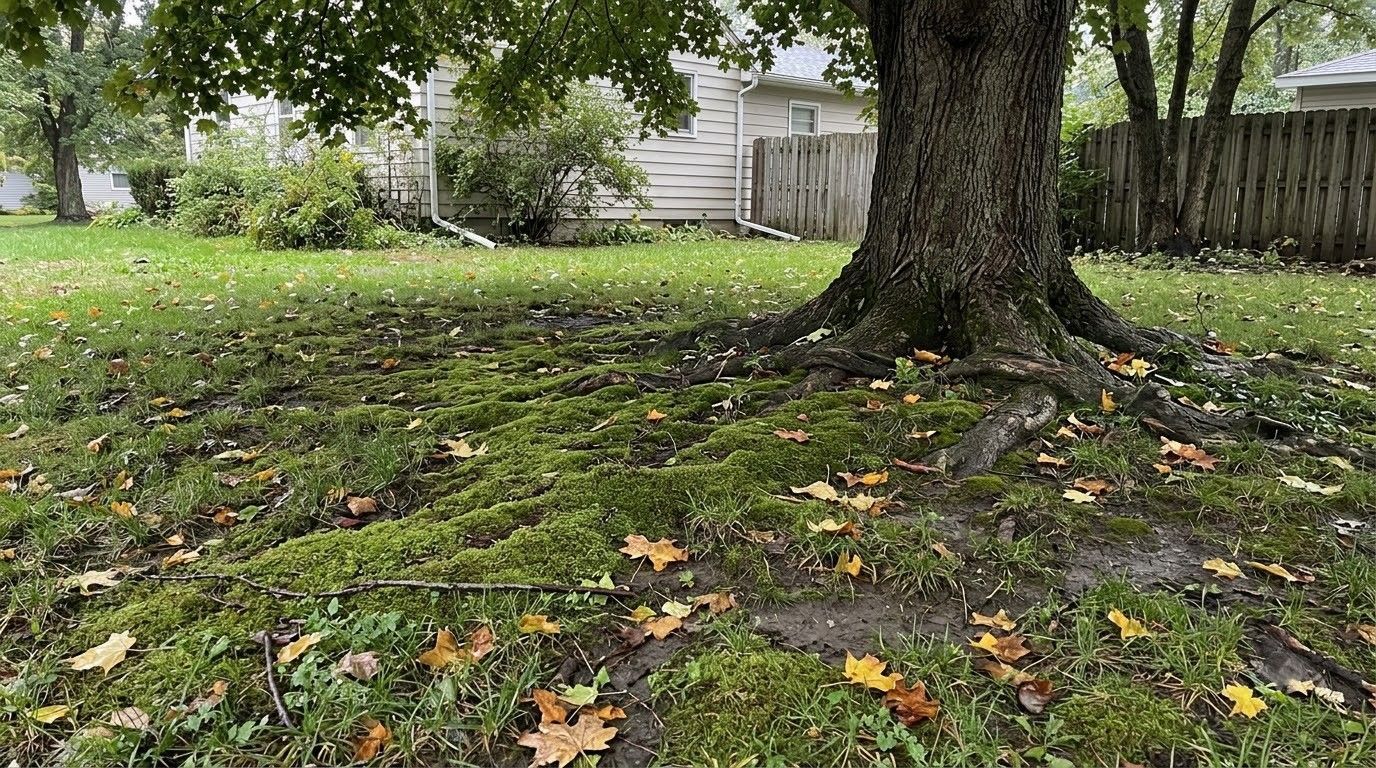
You walk out to the north side of the house on a damp October morning and the grass there looks wrong. Under the maple, a green velvet carpet has spread across what used to be lawn. It feels spongy underfoot, and when you scuff it with your shoe, it peels up in a thin mat with bare soil underneath. You raked it out last spring and it was back by summer.
That frustration is common across Kalamazoo, Portage, and the rest of southwest Michigan, where mature trees, tight side yards, and heavy clay soil set up the perfect conditions for moss. The good news is that moss is not a mystery. It is a fairly honest report on what the ground and the light are doing in that spot, and once you read it correctly, the fix gets much clearer.
Moss Is a Symptom, Not an Invader
Most people treat moss like a weed that attacked a healthy lawn. It usually works the other way around. Moss does not choke out strong turf. It fills in where grass has already thinned and weakened, because moss needs very little to survive. It has no true roots, it handles low light, and it tolerates wet, compacted ground that grass roots hate.
That is why raking or killing moss alone rarely holds. If the shade, compaction, or moisture problem is still there, the grass that tries to come back is just as weak as the grass that died, and moss simply moves back into the opening. Fixing the cause is the only approach that stays fixed.
The Four Conditions Behind Most Moss Problems
Moss rarely has just one cause. In most shady yards, two or three of these are working together.
Not Enough Light
Grass needs sunlight to build reserves for root growth and recovery. Dense trees and north-facing areas often leave turf struggling, while moss thrives.
Compacted Soil
Southwest Michigan’s clay soil compacts under mowing, foot traffic, and settling. Compaction limits root growth and keeps the surface damp, creating ideal conditions for moss.
Poor Drainage
Pooling water, soggy ground, low spots, and downspouts draining onto lawns keep shaded areas wet. Grass struggles when soil cannot dry between rains.
Low Or Unbalanced Fertility
Shaded grass grows slowly and may receive insufficient or unsuitable feeding. Nutrient deficiencies or unbalanced soil pH weaken turf, allowing moss to spread.
Tip: Do not assume moss means your soil is acidic. It can show up in acidic and alkaline soil alike, and guessing at lime can leave you with a pH problem you did not have before. A soil test is the only way to know whether pH is part of the picture.
How to Read What Your Moss Is Telling You
You can learn a lot in ten minutes by walking the problem area before you change anything.
Start with light. Visit the spot at midmorning and again in the afternoon and note how many hours of direct sun it actually gets. If the answer is close to none, grass will always be a struggle there, no matter what you apply.
Next, check the ground. Push a screwdriver or a garden trowel into the soil a few inches. If it resists and the soil feels dense, compaction is part of the story. If water stands on the surface after a rain, or the soil feels soggy a day or two later, drainage is involved. Look at where roof runoff goes, too. A downspout that dumps near the mossy patch is often the quiet culprit.
Then look at what grass is left. Thin, pale, slow growing turf at the edge of the moss tells you the lawn there has been starving for light, air, or nutrients for a while. That is the pattern a pro looks for to decide which fixes matter most for your yard.
What Actually Works to Clear Moss for Good
A durable fix follows the causes. Work through them in this order.
Open Up The Light
Prune low tree branches and thin dense shrubs to increase sunlight reaching the lawn. Even one or two additional hours of direct light can help grass compete.
Relieve Compaction With Core Aeration
Core aeration in spring or fall improves airflow, water absorption, and nutrient movement. Fall works particularly well in Michigan because soil remains warm and cool-season grass actively grows.
Fix The Water
Extend downspouts away from the lawn, fill low spots, and correct grading when necessary. Proper drainage prevents water from collecting in shaded areas after heavy rain.
Test The Soil And Feed Accordingly
Test soil pH and nutrient levels before applying amendments. Shaded lawns generally need less nitrogen than sunny lawns, since excessive feeding can encourage weak growth.
Mow Taller
Keep shaded grass around three inches tall or slightly higher. Longer blades capture more available sunlight and help shade competing growth, supporting healthier turf.
Remove The Moss, Then Reseed
Rake away moss to expose bare soil, then improve underlying conditions before overseeding. Shade-tolerant fine fescues, including creeping red, hard, and chewings types, typically perform better than Kentucky bluegrass.
Warning: Killing moss with a product and walking away is a short lived fix. If the shade, compaction, and drainage are unchanged, new moss can return within a season, and bare dead patches left behind give weeds an easy opening. Treat the moss removal as step one, never the whole plan.
When Grass Is Not the Right Answer
Some spots simply do not get enough light for turf, and it can be better to stop fighting them. Under a thick evergreen or a large mature maple, a lawn may never be dense there no matter how much effort goes in.
In those areas, a shade friendly ground cover, a mulched bed with shade perennials, or a flat stone path can look intentional and need far less upkeep than a struggling patch of grass. A landscaping redesign for the worst corner of the yard often does more for curb appeal than another round of seed.
Timing the Work in Southwest Michigan
Fall is the best season to tackle moss in this region. Soil is warm, rain is steady, and cool season grasses are putting down roots before winter, so aeration and overseeding between now and the first hard freeze give new seed the best chance to establish.
Spring is the second window. Aeration, a soil test, and light pruning all work well once the ground thaws and dries out enough to work. Summer is the weakest time to push new seed in shade, and winter is for planning. If you missed the fall window, use the cold months to schedule pruning and map out which corners need drainage work before the spring thaw.
Frequently Asked Questions
Does moss in my lawn mean my soil is too acidic?
Not necessarily. Moss grows in acidic and alkaline soil alike, and shade, compaction, and poor drainage are more common causes than pH. A soil test tells you whether lime or sulfur would help.
Will raking the moss out solve the problem?
Raking removes the moss for now, but it does not change the conditions behind it. If light, compaction, and moisture stay the same, the moss returns. It works best as a first step before reseeding.
What grass actually grows in shade?
Fine fescues are the best choice for low light. Creeping red, hard, and chewings fescue fill most shade mixes. Even these need a few hours of light, so a nearly dark spot may support none.
Should I fertilize a mossy shaded lawn heavily to thicken it?
No. Shaded grass grows slowly and cannot use large amounts of nitrogen, and too much can weaken it further. A soil test and a lighter, balanced feeding schedule is the better approach for shade.
When is the best time to aerate and overseed a shady area?
Early fall is ideal in southwest Michigan, when soil is warm and cool season grass is active. Spring is a good second choice once the ground has thawed. Summer heat makes shade seedlings struggle.
Is moss harmful to my lawn?
Moss does not directly damage healthy turf. It appears where grass is already thin or weak. The real concern is what it reveals about soil, light, and moisture, since those problems hold back any grass.
Read The Moss, Then Repair The Ground
A mossy shaded corner is not a sign that you did something wrong. It is a clear message about light, compaction, and water in that part of the yard, and moss simply fills the opening where tired grass gave up. Read those three things correctly and the repair becomes a short list rather than a guessing game. Clearing the mat is only the first step, since the shade, the packed soil, and the lingering moisture are what decide whether grass returns.
Snyder's Lawn Care
has spent 25
years reading
shaded lawns
across Kalamazoo, MI, where mature trees, tight side yards, and heavy clay set moss up to thrive year after year. Testing the soil, relieving the compaction, opening the canopy, and reseeding with a shade tolerant blend in the same pass is what makes the result hold past one season. Fixing the conditions, not just the surface, is how a damp green patch turns back into turf that competes on its own.