
Grubs Tearing Up Your Turf? The Signs Before the Damage Spreads
September 28, 2026
Quick Answer: Grub damage shows up as turf that lifts loose from the soil like a rug, dry patches that don't respond to watering, and torn-up sod from skunks or raccoons digging for a meal. In southwest Michigan, the damage becomes visible in September and October, once the grubs hatched in midsummer have grown large enough to do real root damage and a dry fall has weakened the lawn's ability to tolerate it. Cutting back a square foot of turf at the edge of a damaged patch and counting what's underneath is the only way to confirm grubs rather than disease or ordinary drought stress. Five or more C-shaped grubs in that square foot, especially in a lawn already stressed by dry weather, is generally enough to explain visible dieback.
You step off the porch on an October morning and the grass near the mailbox gives like a wet sponge underfoot. A section about the size of a doormat has pulled loose from the soil, rolled back at one edge the way a rug does when someone tries to reposition it and gives up halfway through. The dirt underneath is turned over in loose clumps, and there's no obvious reason why.
That's usually the point homeowners around Kalamazoo first suspect grubs, and by then the insects responsible have already been feeding on root systems for weeks. The lawn didn't fail all at once. It failed underground first, and the surface just caught up.
The Signs That Actually Point to Grubs, Not Something Else
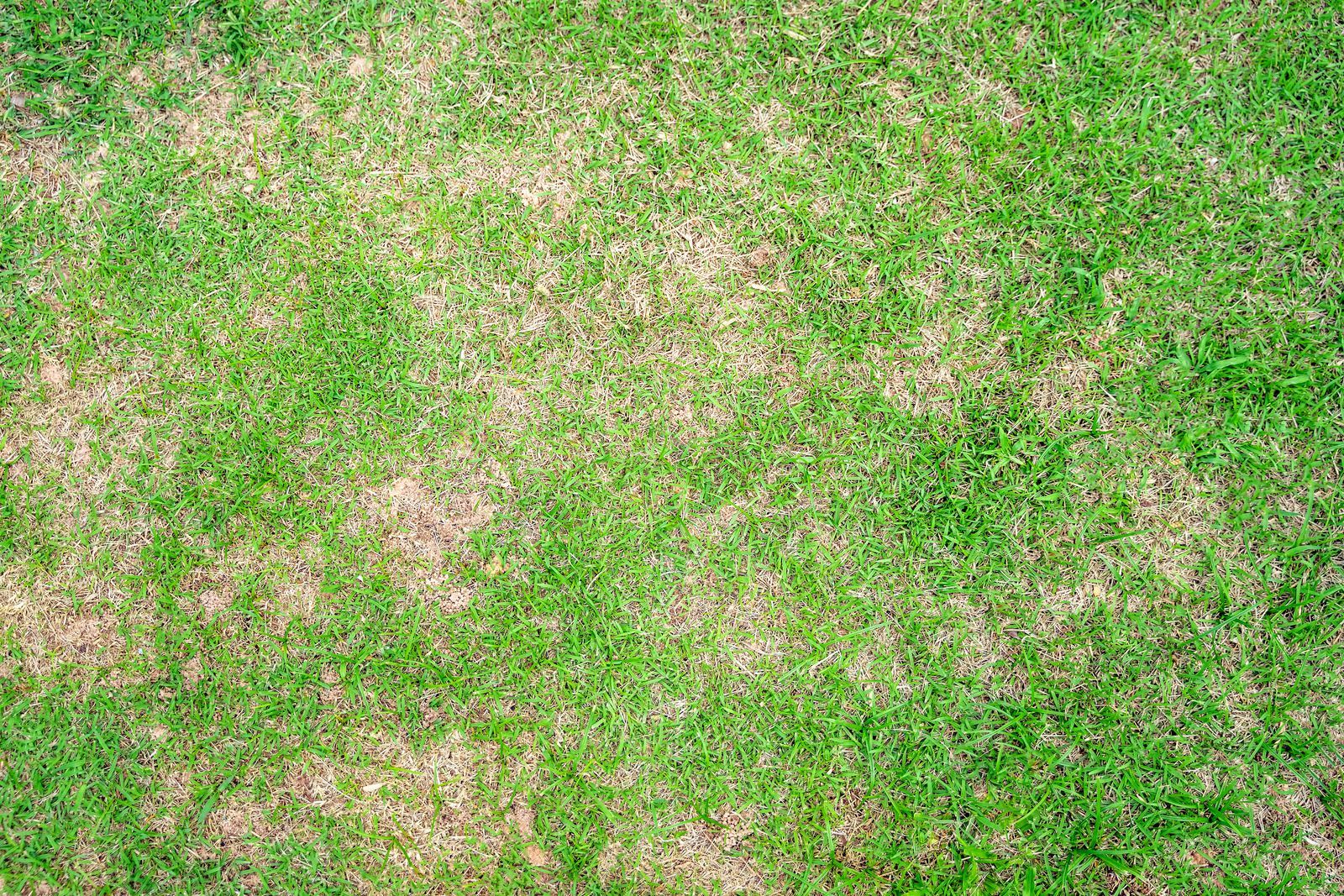
Brown lawns get blamed on drought, disease, and grubs interchangeably, and the three can look similar from the porch. A closer look at how the damage behaves usually sorts it out.
Turf That Lifts Like Carpet
Grubs feed on grass roots just below the surface, and once enough of that root mass is gone, the sod loses its grip on the soil entirely. A patch that peels back in one piece when you tug on it, rather than crumbling or staying rooted, is a strong signal the root system underneath has been chewed through rather than just stressed by heat.
Dry Patches That Don't Green Back Up
Drought-stressed grass usually responds, at least a little, to a good soaking. A patch that stays wilted and dull after a full watering cycle, especially when the rest of the lawn perks up fine, points toward something eating the roots rather than a lack of water reaching them.
Torn-Up Turf From Digging
Skunks and raccoons treat grub-infested lawns like a buffet, and they're not subtle about it. Chunks of sod flipped over or shredded overnight, usually in irregular patches rather than neat rows, is one of the more reliable outdoor signs that grubs are present in numbers worth noticing.
None of these signs alone is proof. A lawn can have dry, wilted patches from heat stress with no grubs anywhere near it. Most homeowners jump straight to grubs the moment they spot a brown patch, and more often than not, that's not actually what's going on. The pattern that actually confirms grubs is what's underneath the turf.
Why September and October Are When the Damage Actually Shows Up
Grub damage in this part of Michigan tends to follow a predictable calendar, and it's tied to how Japanese beetles and European chafers, the two species responsible for most lawn grub problems here, spend their year.
Adult beetles fly and lay eggs in the soil during summer. The grubs that hatch from those eggs start out tiny, close to two millimeters long, and begin feeding on grass roots in July and early August. They keep growing through the rest of the season, reaching close to an inch in length by September. That growth matters because a larger grub eats more root mass per week than a young one, which is exactly why the most visible feeding damage tends to show up in September and October rather than earlier in the summer when the grubs are still small.
European chafer grubs stay active three to four weeks longer into the fall than Japanese beetle grubs do, which is part of why lawns in this region sometimes show fresh damage well into November during a warm, extended fall. Once soil temperatures drop enough, the grubs stop feeding and move deeper into the soil profile for winter, and the visible damage stops progressing until spring.
Tip: A lawn kept on a consistent fertility schedule and mowed at a taller height, generally 3 to 4 inches rather than scalped short, builds a deeper root system that tolerates a moderate grub population without ever showing visible stress. Root reserve, not the absence of grubs, is usually what separates a lawn that shrugs off an infestation from one that shows bare patches by October.
The Square-Foot Test That Actually Confirms Grubs
Guessing wastes time and money, because treating for grubs when the real culprit is a fungal disease or ordinary drought stress does nothing for the lawn and can delay the actual fix by weeks. The scouting method that actually settles it takes about ten minutes.
At the edge of a damaged patch, where healthy and struggling turf meet, cut a square foot of sod using a spade or edging tool, going down two to three inches into the root zone. Peel that section back like a flap and count the C-shaped white grubs visible in the soil and root layer. Repeat this at two or three spots around the yard, since grub populations are rarely even across an entire lawn.
The number that matters varies a bit depending on how the lawn's root system is holding up. A dense, well-irrigated lawn with a strong root system can tolerate a fairly heavy grub population, sometimes ten or more per square foot, without showing any surface symptoms at all, because even a heavy infestation rarely consumes more than half the root mass in a healthy stand of turf. A lawn already stressed by a dry fall is a different story. In drought-weakened turf, as few as five grubs per square foot can be enough to trigger visible dieback, because the root system doesn't have the reserve capacity to compensate for what's being eaten.
Replace the sod flap and water it in after counting. Give it a couple of weeks and it roots back down fine, as long as the soil underneath stays moist.
Why the Same Grub Count Looks Different Lawn to Lawn
This is the part that confuses a lot of homeowners comparing notes with a neighbor. Two lawns can carry nearly identical grub populations and look completely different by October. The difference almost always comes down to root system size and moisture, not the grubs themselves.
A lawn with a large, actively growing root system, the kind built by consistent watering and a fertility program tuned to the season, keeps producing new root tissue faster than a moderate grub population can consume it. Visible symptoms in a healthy lawn generally don't show up until grubs have consumed more than three-quarters of the root system, and even then only if the soil has also gone dry. But take away the drought stress, and that same root damage can go almost unnoticed until the following spring.
New sod follows the same logic in reverse. Freshly laid sod has almost no established root system yet, so it has none of that buffer. A grub population that a mature, well-rooted lawn would tolerate without a hint of trouble can kill a newly seeded or sodded area outright if it dries out even briefly.
Warning: Late-season insecticide applications, especially anything applied after soil temperatures drop into the 50s in November, often fail outright. Once the soil cools, grubs stop feeding near the surface and move deeper, putting them out of reach of most products and making the timing of an application matter as much as using the right one.
Getting the Lawn Back After Confirmed Grub Damage
Once the square-foot test confirms grubs are the actual cause, the response depends on how much of the season is left and how much root damage has already happened.
For active fall damage, a curative insecticide applied while soil is still warm enough for grubs to be feeding near the surface, generally before a hard cold snap sets in, is the only window where treatment reliably works. It needs to be watered in immediately afterward, since the product has to move down into the root zone where the grubs are actually feeding.
For bare or thinned patches left behind, overseeding in early fall while soil is still warm gives new grass a full season to establish roots before next year's grub activity ramps up. Kentucky bluegrass in particular tends to develop a denser root mass than other common turf species, which makes it more tolerant of moderate grub feeding once it's established.
For preventing next year's damage, the groundwork gets laid well before grubs are visible again. A fertility program that keeps the lawn dense through the growing season, mowing at a taller height to encourage deeper roots, and irrigating through dry spells in late summer all build the kind of root reserve that keeps a lawn from showing symptoms even if beetles lay eggs there again.
Frequently Asked Questions
How many grubs per square foot means my lawn needs treatment?
It depends on the lawn's condition. A dense, well-watered lawn tolerates ten or more per square foot without damage, while drought-stressed turf can show dieback at five or fewer.
Can I tell the difference between grub damage and lawn disease without digging?
Not reliably. Fungal disease, grub damage, and drought stress all produce similar brown patches. The square-foot test, cutting back turf to look for grubs directly, is the only real confirmation.
Get on the schedule before the window opens — Snyder's Lawn Care tracks soil conditions across the Kalamazoo, Portage, and Mattawan service area every spring and times pre-emergent applications to what the ground is actually doing rather than a date on a calendar, then builds the mowing and fertilization plan behind it so the lawn crowds crabgrass out on its own.
Is it too late to treat grubs once I see damage in October or November?
It depends on soil temperature more than the calendar. While soil stays warm enough for grubs to feed near the surface, a watered-in curative treatment can still work. Cooler ground ends that window.
Why did my neighbor's lawn get torn up by skunks and mine didn't, even though we share a property line?
Skunks dig where it's easiest and the payoff is biggest, usually a thinner root system with grubs near the surface. A denser lawn carries similar numbers with less surface disruption.
Will grub damage come back every year once I've had it once?
Not automatically. Populations depend on how many beetles laid eggs there the previous summer, which varies yearly. A thicker root system, built through mowing height and watering, keeps damage less visible.
Does watering more help prevent grub damage?
Indirectly, yes. Consistent late-summer irrigation keeps roots actively growing, which lets a lawn tolerate grub feeding without symptoms. Watering won't kill grubs, but it removes the drought stress that exposes an infestation.
A Spongy Patch Rarely Means a Lost Lawn
A grub-damaged section almost always looks worse than it is, because the visible dieback only appears after weeks of feeding that stayed hidden beneath the surface. The lawn didn't collapse overnight, and it rarely needs to be treated as a lost cause. Confirming what's actually happening under that spongy patch, timing any curative treatment to soil conditions instead of the calendar, and rebuilding root reserve are what turn a scary October patch back into ordinary turf by spring.
Grubs turn up in southwest Michigan lawns every fall, and the difference between a patch that recovers and one that spreads usually comes down to catching it early and reading the soil correctly. Snyder's Lawn Care
has spent 25
years working Kalamazoo, MI turf through exactly these seasonal cycles, learning how local root systems, dry falls, and beetle timing play off one another. That kind of read is what keeps a single torn-up spot from setting the tone for the whole yard.